
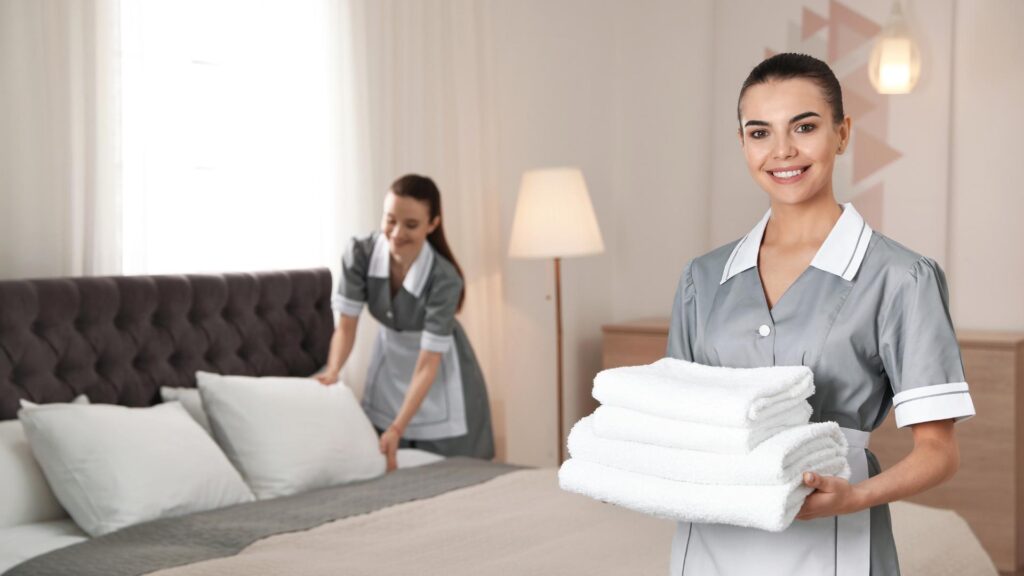
Discover the benefits and find out how you can start right away
Over 25,000 cleaning jobs paying up to £16 per hour
Earn up to £16 per hour as a cleaner! With over 2,000 vacancies available, you choose when and where to work. Find out how to apply today!

Here’s what becoming a housekeeper can offer you:
You will remain in the same website
10 minutes that could help you land cleaning jobs: real advantages, where you may earn more, how to stand out in applications, and tips that actually work. Check below!
Benefits of working in cleaning jobs
Working in cleaning jobs in the UK can offer practical advantages, especially if you’re looking for steady income and flexible shifts. Here are some common benefits:
- Steady earning potential: pay varies by region, employer, shift type, and experience. Many roles pay by the hour, and overtime may be available in some workplaces.
- Consistent demand: hotels, serviced accommodation, offices, schools, clinics, and cleaning contractors frequently hire, which can create regular openings.
- Flexible schedules: many roles offer early morning, daytime, evening, or part-time shifts, which can help you fit work around study or family responsibilities.
- On-the-job training: some employers hire beginners and provide basic training on routines, safety, and equipment.
- Clear routines and expectations: many cleaning roles have defined checklists and standards, which helps you know exactly what “good work” looks like.
- Room to grow: reliable workers often move into senior, team-lead, quality-check, or site-support roles over time.
- Ongoing opportunities: cleaning work exists across multiple sectors, so you can shift between environments (hospitality, offices, residential, facilities) depending on what fits you best.
Challenges of working in cleaning jobs
It’s important to keep expectations realistic. Common challenges include:
- Physical work: lifting, bending, standing for long periods, and moving equipment can be tiring.
- Using cleaning products: chemicals can irritate skin or trigger allergies if safety steps aren’t followed (gloves, ventilation, correct dilution).
- Shifts can be outside “office hours”: early mornings, evenings, weekends, or public holidays may be required depending on the sector.
- High standards: strong attention to detail and consistency matter, especially in places with inspections or strict hygiene rules.
- Time pressure: in busy environments, tasks may need to be completed within a set timeframe.
- Professionalism in different settings: you may work around clients, staff, guests, or residents—staying discreet and respectful is essential.
- Unexpected situations: spills, damaged items, last-minute requests, or complaints can happen.
With consistency, organisation, and the right safety habits, many people adapt quickly and do well in this field.
Best sectors for cleaning jobs in the UK
Choosing the right sector can change your day-to-day experience and your earning potential. Here are common options, from higher-paying/specialised to more flexible entry points:
1) Premium residential or specialist domestic cleaning
Some higher-end homes or specialist domestic roles can pay more, especially when expectations are higher (deep cleaning, detailed finishing, trusted access). These roles may value discretion and references.
2) Hospitality and short-stay accommodation
Hotels, guest houses, and serviced apartments hire regularly and can offer steady hours. Work can be fast-paced, but routines are usually clear and team-based.
3) Rural properties and small hospitality businesses
In some rural or tourist areas, demand can be strong during peak seasons. The pace may vary by property type, and roles can be more general (covering different areas).
4) Student accommodation and residences
Student housing can have structured routines, with demand increasing around move-in/move-out periods. Often involves rooms plus shared areas.
5) Contract cleaning companies (commercial cleaning)
Cleaning contractors often place staff in offices, clinics, retail spaces, and public buildings. A key advantage can be shift variety and the ability to work in different locations.
6) Care settings and healthcare-adjacent environments
Care homes, clinics, and similar settings often need consistent cleaning routines and strong hygiene standards. These roles can be stable but may require more strict procedures.
How to stand out for cleaning jobs
To improve your chances of landing better roles and getting hired faster:
- Add a simple skills section to your CV: punctuality, attention to detail, reliability, and willingness to learn matter a lot.
- Mention relevant experience—even informal: cleaning for family, neighbours, or past side work can count if described clearly.
- Collect references: a short reference from a client, supervisor, or manager can help.
- Show you understand standards: note that you follow checklists, hygiene routines, and safe handling of products.
- Basic English helps: enough to understand instructions, labels, and safety notes.
- Be clear about availability: employers often choose candidates who can cover the needed shift times.
- Be open to training: saying you’re willing to learn equipment and methods makes you easier to hire.
Different types of cleaning jobs (so you apply to the right one)
Instead of “housekeeper vs cleaner,” it’s usually more useful to think in terms of work setting and routine:
- Hospitality cleaning: room/linen-focused routines, faster turnaround, checklist-driven.
- Domestic cleaning: homes, often more personalised priorities and client preferences.
- Commercial cleaning: offices, buildings, and public spaces—often early/late shifts.
- Deep cleaning / end-of-tenancy: more intensive work, sometimes higher pay per job.
- Care/clinical environments: stronger hygiene protocols and procedure-based work.
When applying, match your experience to the setting so the employer sees fit quickly.
Career progression opportunities in cleaning jobs
Starting in cleaning jobs can be a first step toward more responsibility. Common progression routes include:
- Senior Cleaner / Key Holder: trusted with opening/closing tasks and quality checks.
- Team Leader / Supervisor: coordinating small teams, training new staff, and managing routines.
- Site Lead / Area Support: overseeing standards across multiple locations or shifts.
- Specialist roles: deep cleaning, sanitation-focused work, or equipment-based cleaning where available.
- Operations support: stock control, scheduling assistance, quality auditing, or basic admin duties (depending on the company).
If you want to progress, focus on reliability, consistent quality, safe work habits, and clear communication.
Practical tips to promote yourself and stand out when applying
- Keep your CV simple and clean: list responsibilities in clear bullet points.
- Set up job alerts: applying early can make a big difference.
- Reply fast: this sector often moves quickly.
- Confirm your contact details: phone and email must be correct.
- Be specific about shifts you can do: mornings, evenings, weekends, part-time, full-time.
Health and safety tips for cleaning jobs (practical and realistic)
Health and safety is one of the biggest differences between “just cleaning” and being seen as a professional. It protects your body, reduces accidents, and helps you keep consistent quality even on busy days.
- Use chemicals the right way (and avoid mixing products): always follow the label instructions. Mixing products can create dangerous reactions and strong fumes. If a product is “strong,” open windows/doors and keep airflow moving.
- Protect your skin and breathing: gloves are essential for most tasks. If you’re working with sprays, dust, or strong products, consider a mask in poorly ventilated areas. If you notice itching or irritation, switch products and report it—don’t “push through” and make it worse.
- Prevent back, shoulder, and knee pain: cleaning is repetitive. Use safe posture: bend your knees, keep your back straight, and avoid twisting while carrying buckets or vacuum cleaners. For heavy items, break the load into smaller trips.
- Avoid slips and falls: wet floors are the most common risk. Use “wet floor” signs where applicable, clean in sections, and keep cables/hoses organised to avoid tripping. Wear non-slip shoes when possible.
- Use equipment correctly: vacuums, polishers, steamers, and industrial products can cause injury if used wrong. Ask for a quick demo or training if you’re unsure. Good employers expect questions—guessing is what causes accidents.
- Build a “safe routine” that saves time: keep a consistent order (top to bottom, dry to wet, clean to dirty). This reduces rework, avoids cross-contamination, and helps you finish faster without rushing.
- Hydration and energy: long shifts can drain you. Drink water, eat something light before the shift, and take short breaks to stretch—this improves endurance and reduces mistakes.
Commercial sites vs private homes (what really changes)
Even though the tools may look similar, the day-to-day experience can be very different depending on where you work. Knowing this helps you choose roles that match your personality and schedule.
Commercial sites (offices, buildings, clinics, schools)
- More standardised routines: tasks usually follow a checklist and fixed standards (restrooms, kitchens, floors, bins, touchpoints). That can be easier for beginners because expectations are clear.
- Fixed areas and pace: you may be assigned specific rooms or floors and repeat the same routine daily. It’s predictable, but can feel repetitive.
- Shift timing: many commercial cleaning roles happen early morning or evening to avoid interrupting staff and customers.
- Less personal interaction: usually you work quietly around people, with limited conversation. Good for those who prefer focus and a clear workflow.
- Supervision and audits: quality checks are common. That can feel strict, but it’s also a path to promotion—if you consistently score well, you get trusted with keys, stock, or training others.
Private homes (domestic cleaning)
- More personalised expectations: every client has preferences—how they like things organised, which products they want, what to prioritise. This requires communication and flexibility.
- More trust-based: reliability and discretion are crucial. Clients often value consistency as much as “deep clean” results.
- Tasks vary more: beyond general cleaning, you might do occasional deep cleaning, laundry support, organisation, or special requests (always confirm boundaries and pay).
- Scheduling differences: domestic cleaning can be daytime-friendly, but hours may depend on the client’s routine. Income can also fluctuate more if clients cancel.
- Opportunity to build your own client base: if you’re consistent, referrals can grow fast. This can increase earnings over time, but it also requires organisation (calendar, communication, travel time).
Not always. Many cleaning roles accept beginners and provide basic on-the-job training. Experience can help, but reliability, availability, and willingness to learn are often just as important.
Commercial cleaning is usually easier for beginners because routines are standardised and expectations are clearer. Private homes can pay more over time but require stronger communication and trust.
Yes, cleaning work can be physically demanding due to repetitive movements and long periods on your feet. Using proper posture, taking short breaks, and following safety routines helps reduce strain.
Yes. Consistent performance can lead to senior cleaner, team leader, or site supervisor roles. Some workers also move into specialist cleaning or operational support positions, depending on the employer.
Conclusion
Working in cleaning jobs in the UK can be a practical option for those looking for income relatively quickly, even without prior experience.
With consistent demand across different sectors, flexible shift patterns, and the chance to build experience over time, cleaning roles can help you create a stable routine while earning in pounds.
If you’re ready to take the next step, update your CV, register on job platforms, and start applying for cleaning jobs that match your availability.


